Telltale signs: hydro jetting
A cable is excellent for breaking through a plug, yet it leaves most of the coating behind. Kitchens that have seen years of cooking fat, main lines lined with scale, and drains that clog again within weeks of being cleared are the usual candidates for jetting. It is also useful after root cutting, to flush the fragments out instead of leaving them to catch the next load of paper.
- Clogs returning soon after a cable cleaning
- Grease build-up in a kitchen line or shared stack
- Sand, silt or scale settled in a long horizontal run
- Preparation for a pipe lining or repair
What we bring
- Jetter or sectional cable machine with root and grease heads
- Push camera with a sonde to mark depth
- Spare cleanout caps and test balls
Tested before we leave
- Camera run end to end after clearing
- Depth and distance of each defect marked
- Recording reviewed with you on screen
On the job: what we open, clear and test
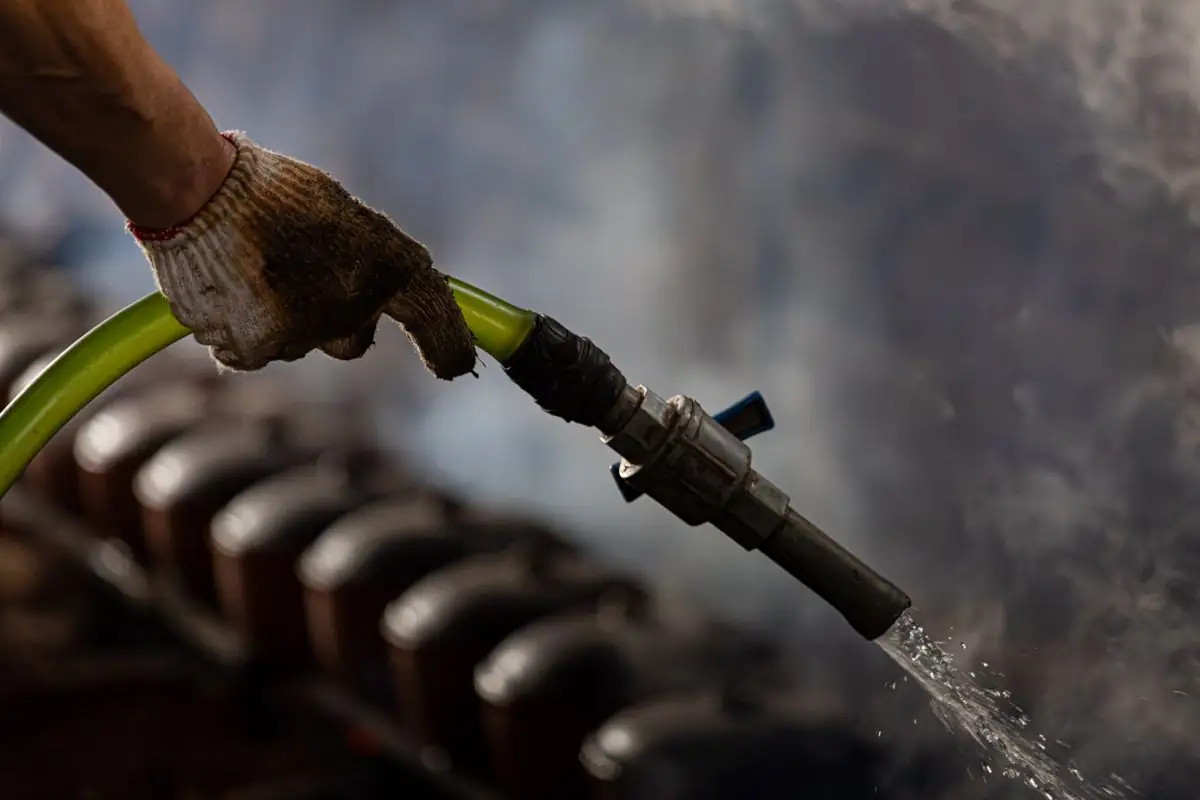
We prefer to look before we jet. A sewer camera inspection confirms the pipe is sound enough to take the pressure; a cracked clay joint or a collapsed section is not something to blast. With that settled, a hose fitted with a rear-facing nozzle is fed through a cleanout. The backward jets pull the nozzle along while scouring the walls, and the loosened material is flushed downstream to the city sewer.
Pressure and nozzle choice are set for the pipe in front of us. A three-inch kitchen branch gets a much gentler approach than a four-inch main. Afterwards we run the camera through again, if you like, so you can see the cleaned pipe for yourself.
What can change the job
A usable cleanout makes all the difference. Homes without one may need a fixture pulled or a new access point added, which we price separately and explain. Pipe condition is the second consideration: badly corroded cast iron or a line with a known break may be better served by a sewer line repair first. Water supply and space for the equipment near the access point round out the list.
Etobicoke homes and this job
Older houses around Islington Village and along Dundas Street West often have long laterals running toward the street beneath established maples and elms. Fine roots find the joints, and a combination of cutting and jetting tends to keep those lines clear longer than cabling alone. Low-rise apartment buildings and restaurants along Lake Shore Boulevard and The Queensway see the grease side of the problem in shared kitchen stacks.
Before you call
Find any cleanout caps in the basement or near the front wall and clear a path to them. Tell us when the line was last cleaned and how quickly it clogged again. If winter is near, our note on preventing frozen pipes is worth a read too, since a frozen outside tap can stop us connecting a hose. Ring (365) 816-2905 to book a visit.