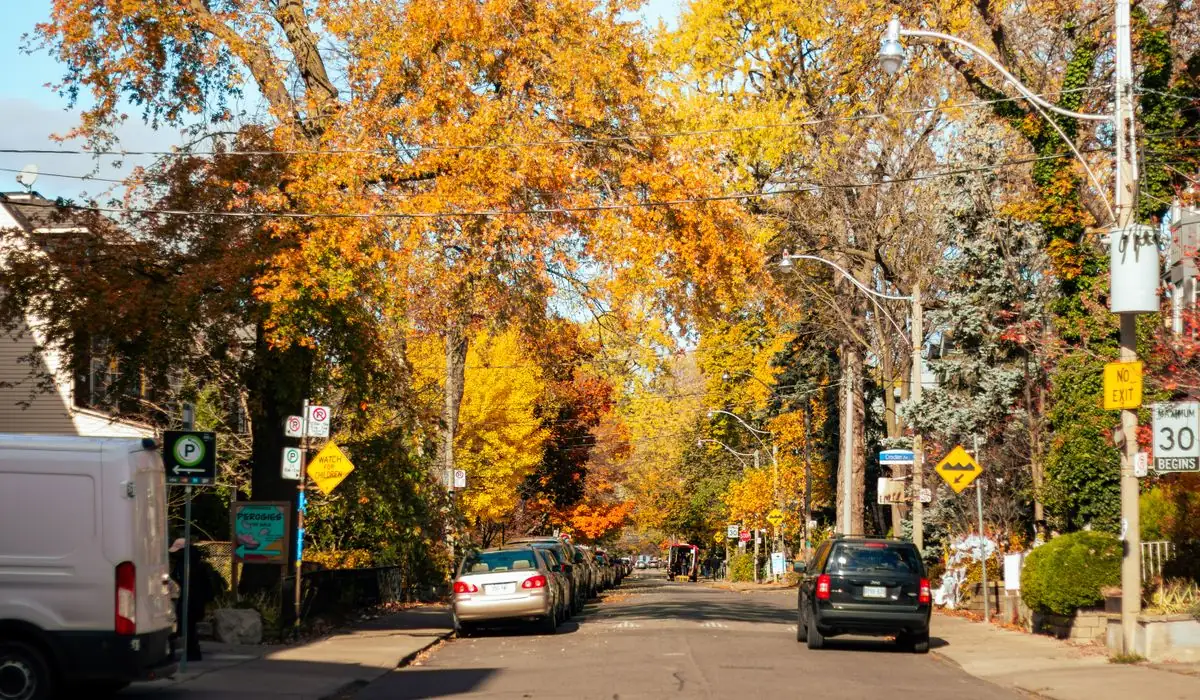
Islington Village houses and their plumbing
Islington Village began as a nineteenth-century crossroads settlement on Dundas Street, and traces of that age survive in a handful of older buildings and the murals that tell the area's story along the main street. The residential streets around it filled in mostly from the 1930s through the 1960s, with storey-and-a-half brick homes, solid bungalows and some larger detached houses on deep lots. Low-rise apartments and newer infill homes have appeared closer to Islington Avenue and the subway.
Plumbing in these houses has usually been updated in stages. A kitchen may have new copper while the basement still carries a cast iron stack and an original gate valve at the meter.
What fails in these pipes
- Root intrusion into clay sewer laterals beneath mature front-yard trees.
- Scaled drains in cast iron that narrow over time and catch grease and hair.
- Seized shut-off valves that no longer close properly when needed.
- Sump pumps in older homes that cycle too often or fail after years in service.
Homes along the slope toward Mimico Creek can see more groundwater than those on higher ground, which makes a dependable sump especially valuable.
Jobs we take on here
For drains thickened with scale or grease, hydro jetting scrubs the pipe wall back to a fuller diameter. A pump that hums but will not move water, or a float that sticks, falls under sump pump repair. We also fit water heaters, trace leaks, replace valves and fixtures, and help with renovations in these older homes, keeping you informed at each step.
Shops and small businesses along Dundas sometimes call about restaurant-style grease problems or washroom fixtures; we are glad to talk through what is involved before starting work.
Under the floor: what we open up
Islington Village mixes older brick houses with apartment blocks on Dundas. In the houses we find galvanized branches spliced to copper and wet-vent arrangements that gurgle; in the blocks we work from suite shut-offs and old chrome P-traps that have thinned to paper. Call (365) 816-2905 and describe what the water is doing at that fixture.