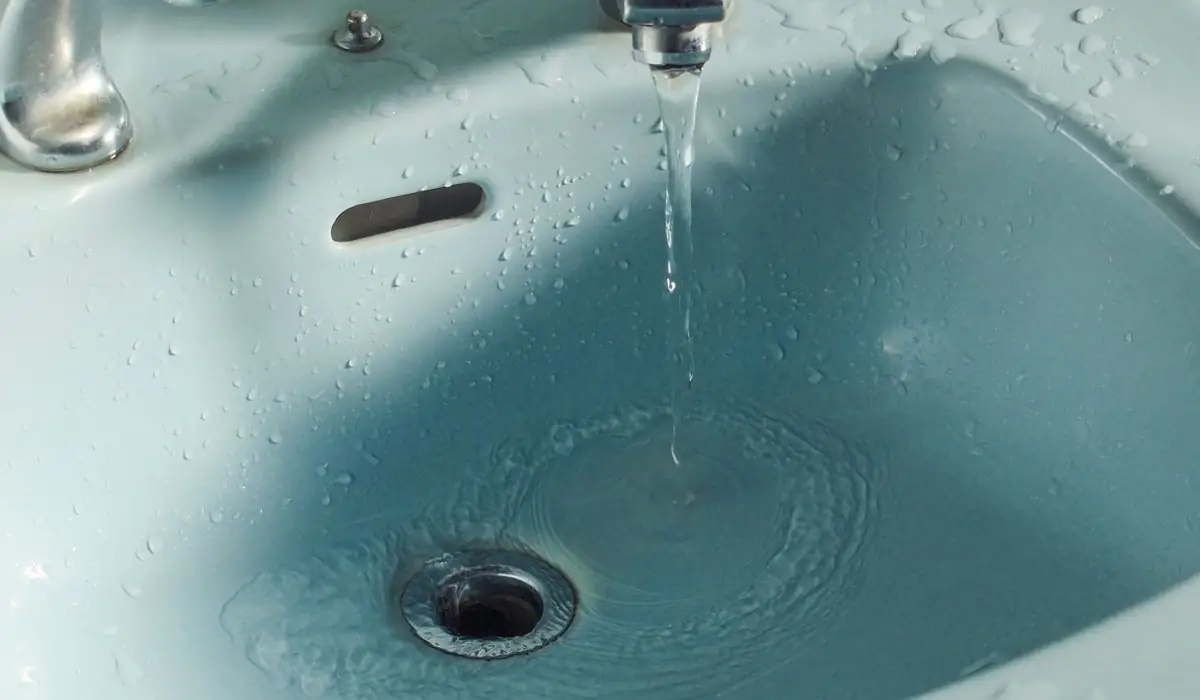
Telltale signs: drain cleaning
Most drains give fair warning. Water lingers in the basin after you brush your teeth, the shower leaves an ankle-deep pool, or a bubbling sound rises from the tub when the washing machine empties. One sluggish fixture points to a local clog in its own trap or branch. Several fixtures slowing together, especially on the lowest floor, suggest the trouble lies further down the line.
- Water draining more slowly week by week
- Gurgling from a nearby fixture when another one drains
- A sour or musty smell that returns after cleaning
- Water appearing at the basement floor drain during laundry
What we bring
- A drum machine and hand auger matched to the bore
- Slip-nut wrenches and a box of trap washers
- Wet vacuum and drop sheets
Tested before we leave
- Full-flow test with a filled basin or tub
- Every slip joint we opened checked dry
- Trap reassembled with a fresh washer
On the job: what we open, clear and test
We begin by asking which fixtures are affected and since when, because the pattern tells us where to look. For a single sink or tub, the trap is opened or a hand cable is fed through the overflow or cleanout. Longer runs get a powered drum machine with a cutting head sized to the pipe. Where grease or scale has coated the walls rather than plugged them, we may suggest hydro jetting instead, and we explain why before anything is switched on.
Once water runs freely, we test with a generous flow and check the joints we disturbed. Specific fixtures have their own pages, such as kitchen drain cleaning and bathroom drain cleaning.
What can change the job
Access matters a great deal. A finished basement with no reachable cleanout takes longer than an open laundry room. Pipe material is another factor: cast iron and old galvanized lines carry scale that catches debris, while newer ABS plastic tends to block only from what is put into it. Recurring blockages in the main line may call for a camera inspection so the cause is seen rather than guessed.
Etobicoke homes and this job
Post-war bungalows across Etobicoke often still have their original cast-iron soil stacks, and their vitrified clay sewer laterals snake under mature front-yard trees. Roots and rust both narrow these pipes over the decades. Lakeshore houses in New Toronto and Mimico add another wrinkle: older basements were frequently plumbed with the floor drain tied straight into the sanitary line, so a main-line blockage shows up there first.
Before you call
Stop running water into the affected drain, and if the basement floor drain is backing up, hold off on laundry and dishwashers. Note which fixtures are slow and whether anything unusual went down recently. It also helps to know where your main valve sits; our guide to finding the main water shut-off takes a few minutes to read. Then ring us on (365) 816-2905 and we will talk it through.