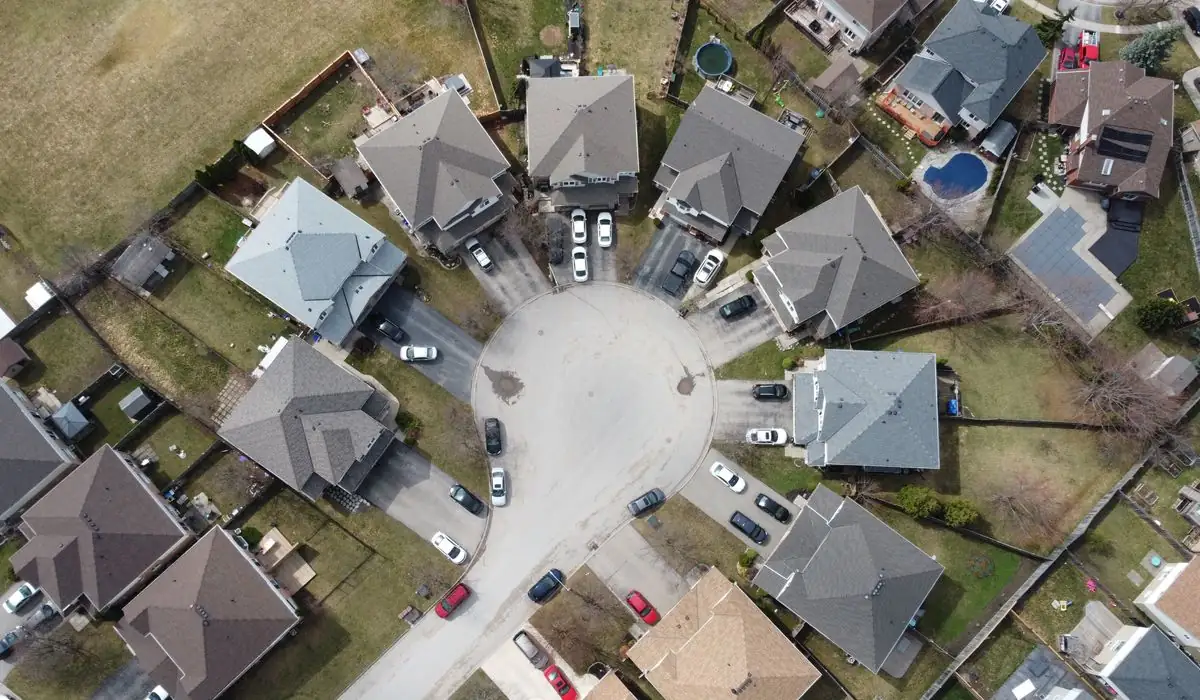
Eringate-Centennial houses and their plumbing
Eringate-Centennial took shape largely in the 1960s, when builders laid out curving streets and crescents between Renforth Drive and Centennial Park. Most homes are brick bungalows, backsplits and side-splits on generous lots, with a scattering of townhouse complexes and apartment buildings near Eglinton Avenue. Many original owners stayed for decades, and a newer generation of families is now renovating the houses they bought.
The plumbing from that era is fairly consistent: copper supply lines, cast iron or early plastic drains, and basements that were often finished later with laundry rooms and recreation spaces.
What fails in these pipes
- Floor drains that back up or smell when their traps dry out or the line beneath clogs.
- Aging water heaters, many of them rentals in their second decade of service.
- Split-level drainage, where lower-level fixtures sit close to the sewer and show trouble first.
- Pinhole leaks in original copper lines after many years of hard water.
Split-level and backsplit designs mean the lowest floor is often a family room or laundry, so a backup there causes real disruption. Keeping the main drain clear is worth the attention.
Jobs we take on here
We handle floor drain repair, from refilling dried traps and clearing blockages to replacing broken drain covers and fitting backwater protection. Homeowners replacing a tired tank often ask about electric water heater installation alongside gas options, and we explain the trade-offs without pushing either. Leak detection, faucet and toilet repairs, and bathroom updates round out most of our visits here.
Under the floor: what we open up
Eringate split-levels hide the water heater, softener and main stack on a half level by the side door. We trace the copper from the meter, check the dielectric unions at the tank, and test the floor drain trap primer that most of these houses never had. Call (365) 816-2905 and describe what the water is doing at that fixture.