Why it matters to the pipes
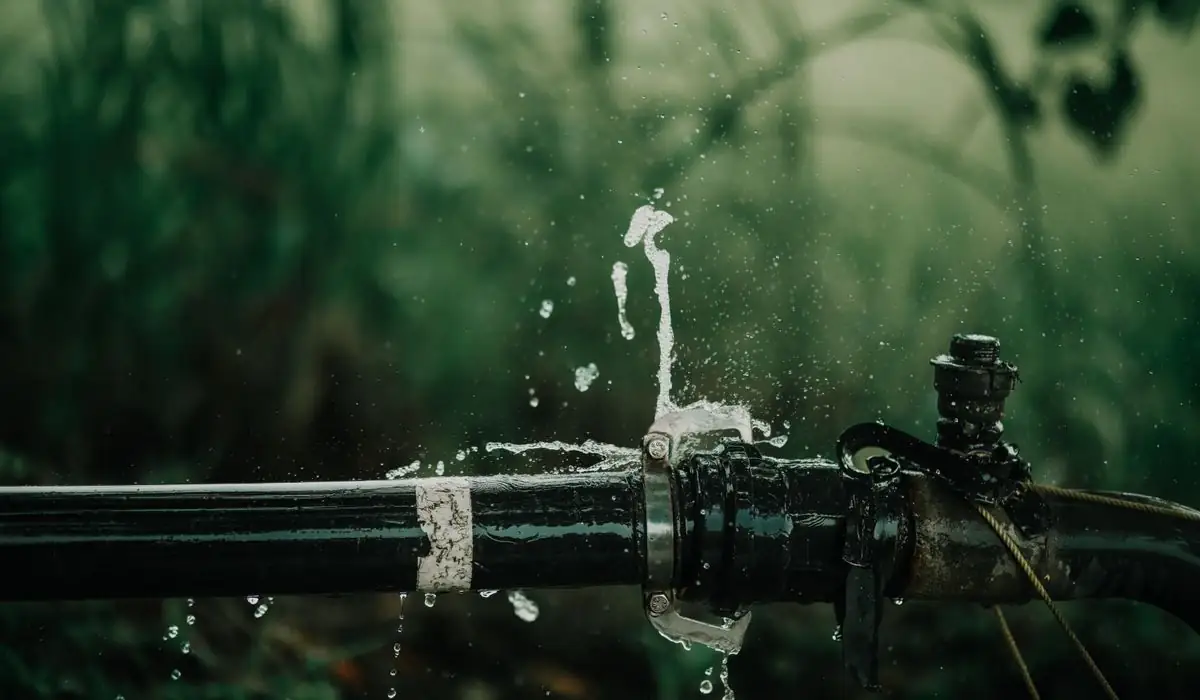
A half-inch pipe at household pressure can release hundreds of litres an hour. Every minute it runs soaks more drywall, flooring and belongings, and water that reaches wiring adds a second danger. The plumbing repair is rarely the expensive part; the water damage is.
That is why the first few minutes belong to you, not to the plumber. A calm sequence of three or four actions does more good than anything we can do from the road.
Have to hand
- A flashlight and a bucket
- Old towels and a pair of gloves
- The way to the main valve
Put the tools down if
- Water will not stop at the valve
- Sewage rises in a floor drain
- You smell gas near the heater
The steps, in order
- Close the main valve. Look low on the foundation wall nearest the road and turn the handle right until it stops. The shut-off finder has the details.
- Mind the electricity. If water is near outlets or appliances, kill those breakers, provided the panel can be reached from dry ground.
- Turn off the water heater. Set gas to pilot or switch off power to an electric tank.
- Open a low tap. Draining the system relieves pressure and empties the pipes faster.
- Move belongings and start drying. Lift rugs, open cupboards and get air moving.
- Photograph everything for your insurer before it is cleaned up.
Practise once. Find and turn your main valve on a calm day. A valve that sticks or refuses to seal, that is worth fixing before you need it.
Common missteps
- Leaving the water on while you look for a plumber's number
- Walking through standing water near live outlets
- Using a hair dryer or heat gun on a frozen, split pipe
- Wrapping tape around a split and turning the water back on
When to ring for help
Call as soon as the water is stopped. Our emergency plumbing page describes what happens next. Ring (365) 816-2905.