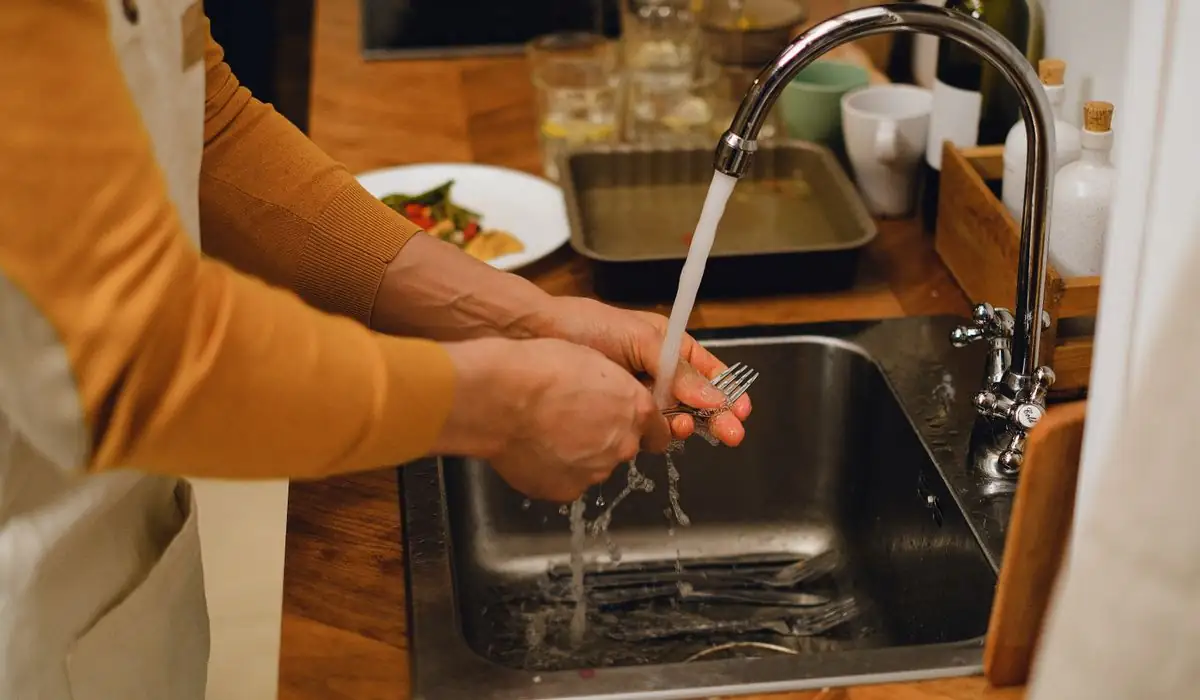
Why it matters to the pipes
Drains are designed to carry water and human waste, and little else. Fats, fibres and so-called flushable products cling to pipe walls and catch on joints, building a blockage slowly until one evening the sink or toilet stops draining. Beyond your home, the same materials form fatbergs in city sewers, which cost a great deal to clear. Toronto Water regularly reminds residents not to put grease or wipes into the system.
Have to hand
- A flashlight and a bucket
- Old towels and a pair of gloves
- The way to the main valve
Put the tools down if
- Water will not stop at the valve
- Sewage rises in a floor drain
- You smell gas near the heater
The steps, in order
- Collect cooking fat. Pour cooled grease into a container and put it in the green bin once solid, or as the city's current guidelines direct.
- Wipe pans before washing. A paper towel removes the film of oil that would otherwise coat the drain.
- Scrape plates into the compost. Rice, pasta and coffee grounds swell and settle in traps.
- Use a sink strainer. A cheap mesh basket stops peelings at the kitchen sink and hair in the tub.
- Bin the wipes. Whatever the packet says, wipes stay whole long after tissue has dissolved.
- Run hot water after use. A minute of hot water helps carry soap and residues away.
Common missteps
- Grease, oil and fat, including butter, dressings and sauces.
- Wipes, cotton swabs and dental floss, which tangle and snag.
- Feminine hygiene products and paper towels, which do not dissolve.
- Paint, solvents and medications, which go to a city drop-off depot for hazardous household waste.
- Eggshells and fibrous peelings, even with a garbage disposal.
- Chemical drain openers used repeatedly, which can damage older pipes; see our notes on chemical drain cleaners.
Sump pits deserve a mention too. They are not drains for household waste; pouring anything into them can foul the pump or the outdoor discharge. Our sump pump installation page explains how they should work.
When to ring for help
A single slow drain can often be cleared with a plunger or a hand auger. If several fixtures slow at once, the basement floor drain fills, or a toilet burbles whenever another fixture runs, the main line is the probable culprit. That calls for professional clearing and possibly a camera inspection to see why it happened.
Older homes need extra care
Etobicoke houses with cast iron or clay drains are less forgiving than newer homes with smooth plastic pipe. Scale and rough joints catch grease and fibres easily, and roots may already be narrowing the main line. In these homes, good drain habits are worth even more, and an occasional professional cleaning can keep the flow steady. If you have just moved into an older house, a camera inspection will show what condition the drains are in.